A vessel’s condition can directly influence its safety, reliability, operational efficiency, and long-term value. Regular assessment helps stakeholders understand the current condition of important marine assets.
A marine condition survey provides an independent assessment based on the agreed inspection scope.
What Does a Condition Survey Cover?
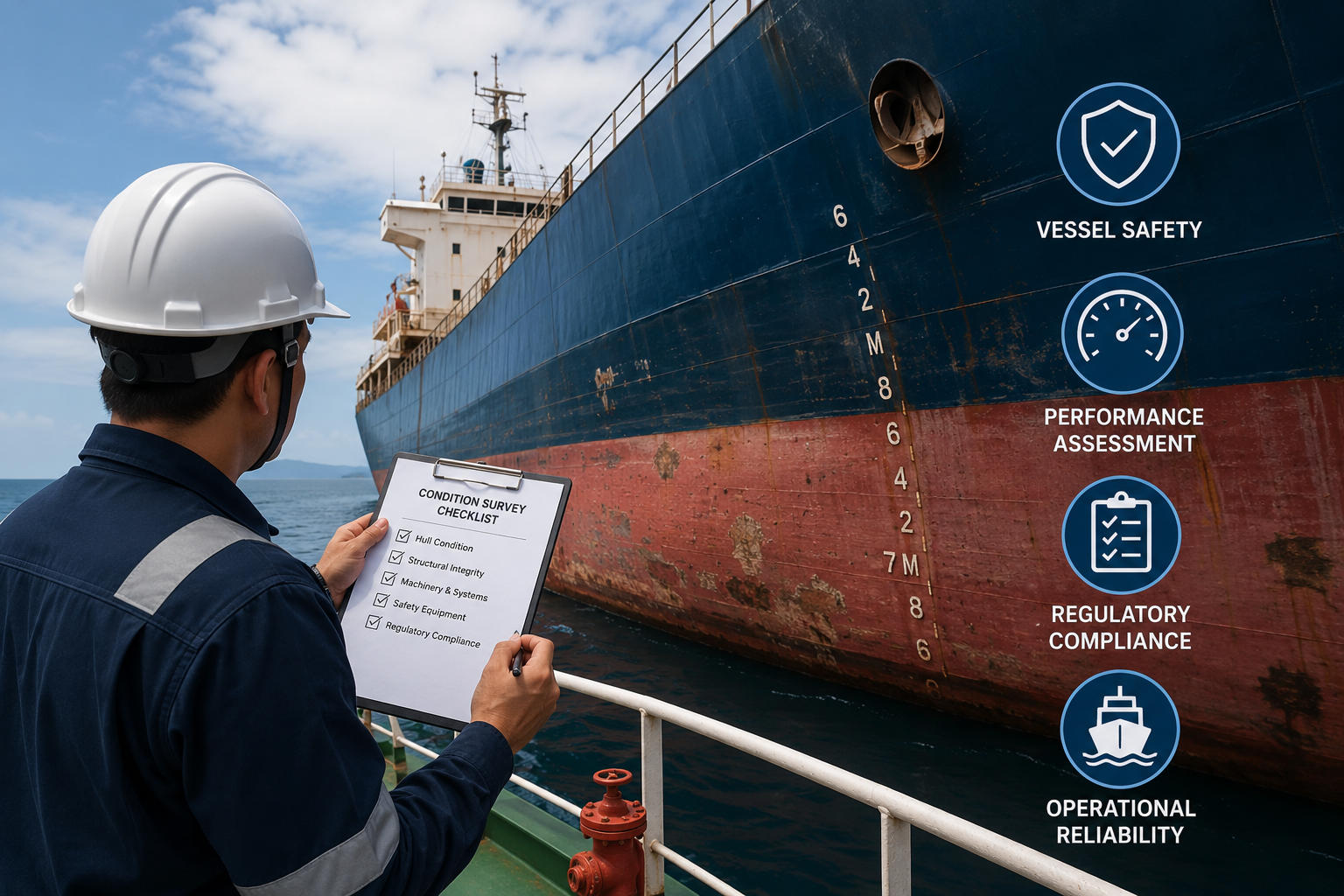
The scope can vary depending on the vessel and purpose of the inspection. Areas may include:
- Hull and structural condition
- Deck and fittings
- Machinery and equipment
- Navigation systems
- Safety equipment
- Accommodation areas
- Cargo spaces
- Available documentation
Identifying Maintenance Requirements
Condition surveys can help identify visible deterioration and maintenance concerns before they develop into more serious operational problems.
Early identification allows vessel owners and operators to prioritize maintenance and plan corrective actions more effectively.
Supporting Compliance
Marine operations are subject to various technical, contractual, and regulatory requirements. A condition survey can provide useful information about the current state of the vessel and highlight areas requiring attention.
Why Independent Assessment Matters
An independent surveyor provides an objective perspective on the vessel’s condition. This can be particularly useful for owners, buyers, insurers, charterers, and other stakeholders.
Better Information, Better Decisions
Accurate condition information supports decisions related to maintenance, investment, chartering, insurance, and vessel operations.
Conclusion
Marine condition surveys are an important part of responsible asset management. Regular professional inspection can help identify concerns, support maintenance planning, and improve operational awareness.
Kalinga Marine Surveyors Private Limited provides professional marine inspection and survey services tailored to vessel and project requirements.