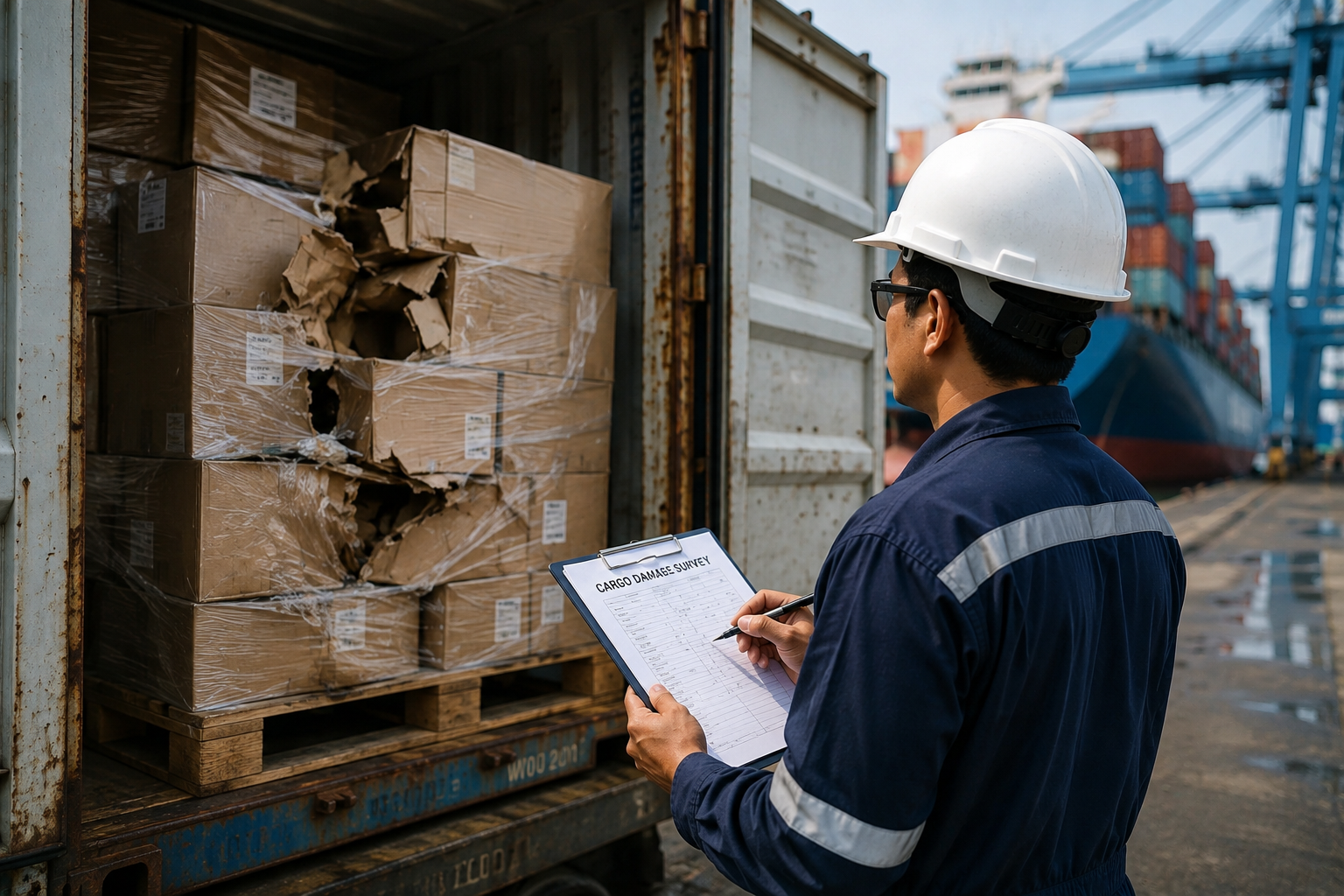
Cargo damage during maritime transportation can lead to significant financial losses, operational delays, insurance claims, and disputes between shipowners, charterers, cargo owners, receivers, terminals, and other stakeholders.
At Kalinga Marine Surveyors Private Limited, our Cargo Damage Survey services provide an independent and factual assessment of damaged cargo, helping clients understand the condition of the cargo, document visible damage, and establish evidence for further commercial or claims-related action.
Our experienced marine surveyors conduct inspections at ports, terminals, CFS facilities, warehouses, and other relevant locations, depending on the nature of the assignment.
What Is a Cargo Damage Survey?
A Cargo Damage Survey is a professional inspection carried out to assess the nature, extent, and apparent condition of cargo damage.
The survey may be conducted when cargo is found damaged:
- During loading
- During discharge
- At the port or terminal
- During container stuffing or destuffing
- At a CFS
- During cargo delivery
- Following a transportation incident
The objective is to document factual observations and provide a professional report supported by photographs and relevant information.
Common Causes of Cargo Damage
Cargo can be affected by various factors throughout the transportation and handling process, including:
Improper Handling
Incorrect lifting, loading, unloading, or movement can result in physical damage to cargo.
Inadequate Stowage
Improper positioning, weight distribution, or securing may cause cargo to shift or sustain damage during transportation.
Water or Moisture Exposure
Water ingress, condensation, rainwater, or inadequate protection can affect cargo condition.
Packaging Failure
Weak, damaged, or inadequate packaging can increase the risk of cargo deterioration or physical damage.
Handling Equipment
Improper use of cranes, grabs, forklifts, slings, or other equipment may contribute to cargo damage.
Cargo Shifting
Insufficient securing or unsuitable dunnage can allow cargo to move during vessel operations or transportation.
Our Cargo Damage Survey Process
1. Initial Inspection
Our surveyor examines the cargo and surrounding conditions to understand the reported damage.
2. Condition Assessment
We document the visible condition of the cargo, packaging, containers, holds, or relevant handling areas.
3. Damage Documentation
Photographs and factual observations are recorded to provide clear evidence of the condition observed during the survey.
4. Quantity & Package Verification
Where required, we verify cargo quantity, package counts, and apparent shortages against available shipping and cargo documents.
5. Investigation & Assessment
We review the available information and assess the apparent nature and possible contributing circumstances of the damage, without overstating conclusions beyond the available evidence.
6. Professional Reporting
A detailed survey report is prepared containing observations, photographs, relevant measurements or quantities, and other information gathered during the assignment.
What Our Survey Report Can Include
Depending on the assignment, the report may include:
- Cargo identification
- Vessel and voyage details
- Port and survey location
- Date and time of inspection
- Cargo condition
- Nature and extent of damage
- Package condition
- Quantity observations
- Photographic evidence
- Relevant shipping documentation
- Surveyor’s factual observations
- Damage assessment
- Supporting information for claims
Our company profile specifically identifies damage assessment, root-cause analysis, photographic reporting, joint surveys, and claims support among our marine survey capabilities.
Cargoes We Can Support
Our marine experience covers a range of cargoes, including:
- Steel Products
- Steel Coils
- Billets
- Slabs
- Plates
- Pipes
- Structural Steel
- Rebars
- Coal
- Iron Ore
- Limestone
- Clinker
- Gypsum
- Fertilizers
- Minerals
- Bauxite
- Project Cargo
- Bulk Commodities
The company profile identifies these cargo categories as part of its chartering and marine operations experience.
Joint Cargo Damage Surveys
Cargo damage can involve multiple stakeholders. Our team can participate in joint surveys involving:
- Shipowners
- Charterers
- Receivers
- Shippers
- Terminal operators
- CFS operators
- Insurance representatives
- P&I correspondents
- Other authorized parties
Joint inspections help stakeholders establish a common factual record of the cargo condition at the time of inspection.
Why Choose Kalinga Marine Surveyors?
Independent Assessment
We provide impartial survey observations focused on factual documentation.
Experienced Marine Professionals
Our team includes experienced Master Mariners, Marine Engineers, Chief Officers, and qualified Marine Surveyors.
Detailed Documentation
Survey findings can be supported with photographs and comprehensive reporting.
Cargo Expertise
Our experience includes steel cargoes, bulk commodities, project cargo, and containerized cargo operations.
Claims Support
Our damage assessment and documentation can provide useful technical evidence for insurance and commercial claims.
Prompt Response
We provide fast response and 24×7 operational availability for marine requirements.
Protect Your Cargo. Document the Facts.
When cargo damage occurs, timely and accurate documentation is essential.
Kalinga Marine Surveyors Private Limited provides professional Cargo Damage Survey services to help shipowners, charterers, cargo interests, insurers, P&I correspondents, importers, exporters, and logistics stakeholders establish a clear record of cargo condition and damage.